Kava's Purity and Quality
Most kava drinkers don't realise how much variation exists in what's sold under the word "kava". Some of it isn't safe; much of it isn't good. Beyond the common food-product concerns of microbial contamination, adulteration, and spoilage, kava has its own quality dimensions that consumers should understand: the difference between noble and non-noble cultivars, the distinction between roots and aerial parts of the plant, the cleanliness of processing, and the rigour of testing.
Four issues, covered in turn below.
On this page:
1. Noble vs Non-Noble Kava
2. Roots vs Aerial Parts of the Plant
3. Cleanliness and Food Hygiene
4. Testing and Verification
1. Noble vs Non-Noble Kava
The ancestor of modern kava (Piper wichmannii, wild kava) was domesticated by ancient Pacific islanders around 3,000 years ago. Modern kava (Piper methysticum) is a sterile plant that can only be reproduced by propagation from stem cuttings, making it a remarkable result of centuries of careful selection by growers preserving desirable characteristics and minimising negative effects.
Noble kava cultivars are the highly desirable varieties traditionally consumed on a daily basis. Vanuatu's Kava Act 2002 makes it illegal to export anything other than noble cultivars from the islands. Noble kavas have desirable kavalactone compositions (chemotypes) that produce pleasant, beneficial effects, with very low concentrations of compounds that might cause adverse reactions. As Lebot and Teschke note, only noble varieties have a "good reputation of safe use in Pacific Islands countries" and have been "consumed on a daily basis without apparent adverse effects when used in normal quantities".
Non-noble kavas (sometimes labelled "Tudei", "Isa", or "Koniak", and sometimes mislabelled as noble cultivars) have undesirable chemotypes and high concentrations of flavokavains. They have higher risk of nausea, next-day lethargy, and other adverse reactions. They were never traditionally consumed as a daily beverage, and have been suspected as one cause behind some of the historical adverse effects associated with certain Western kava supplements.
Why was non-noble kava grown then? Two reasons: it grows faster (noble kava takes 3 to 5 years to mature; non-noble much less) and feels deceptively "potent" to people unfamiliar with kava chemotypes. In the 1990s, some Vanuatu farmers were even contracted by Western pharmaceutical companies chasing high kavalactone counts. Things have improved significantly since then, helped by the Vanuatu Kava Act and the 2020 adoption of the Codex Alimentarius Regional Food Standard for Kava, which formally recognises kava as safe when made from noble varieties. Most farmers now grow noble kava only. The problem hasn't disappeared, though, particularly in the Solomon Islands and Papua New Guinea, where domestic consumption is low and growers may not always distinguish between cultivars.
What we do: we only carry noble cultivars. For a deeper look at chemotypes and what makes a kava noble, read our deep dive on chemotypes or our interview with Dr Vincent Lebot.
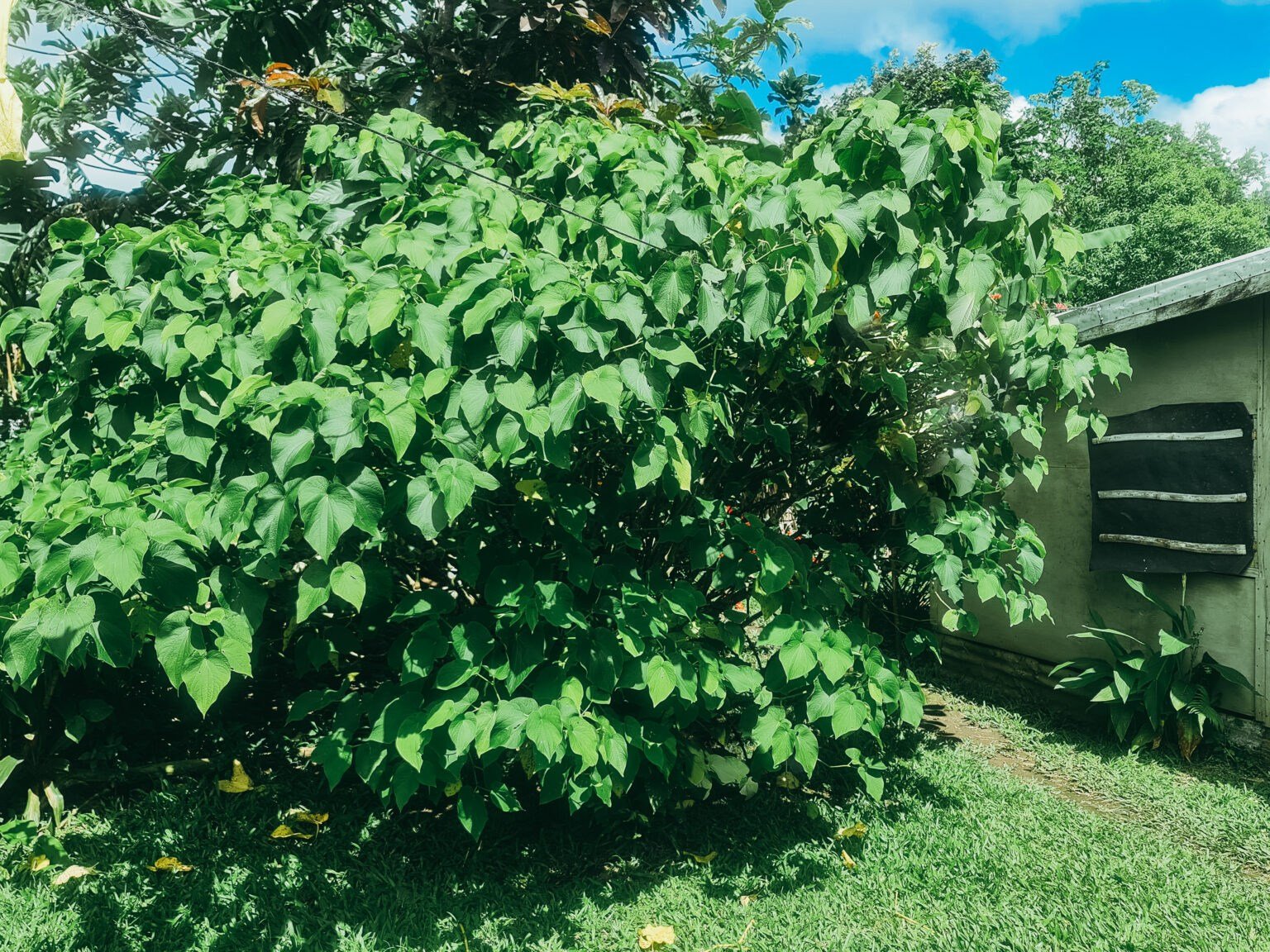
Noble kava (Puariki cultivar) grown on the island of Tongoa.
2. Roots vs Aerial Parts of the Plant
Another quality issue in the kava industry is the use of aerial parts (leaves and stems) of the plant. Unlike the roots, the aerial parts contain a potentially toxic alkaloid (pipermethystine) and very low concentrations of kavalactones. Even well-peeled stems are at best a cheap filler with negligible active content. Aerial parts have never been traditionally consumed; their sale for human consumption is technically illegal in a number of jurisdictions including New Zealand.
Many plants have edible and toxic parts (potatoes and tomatoes have toxic leaves), but unlike a tomato fruit versus a tomato leaf, you can't tell from looking at a powdered kava whether it contains aerial parts. This makes it tempting for unscrupulous farmers and distributors to mix stems and stem peelings with kava roots to lower costs. Extreme cases involve mixing kava with sawdust, flour, or even cement powder. While the worst examples are rare, low-grade adulteration with aerial parts is sadly not uncommon.
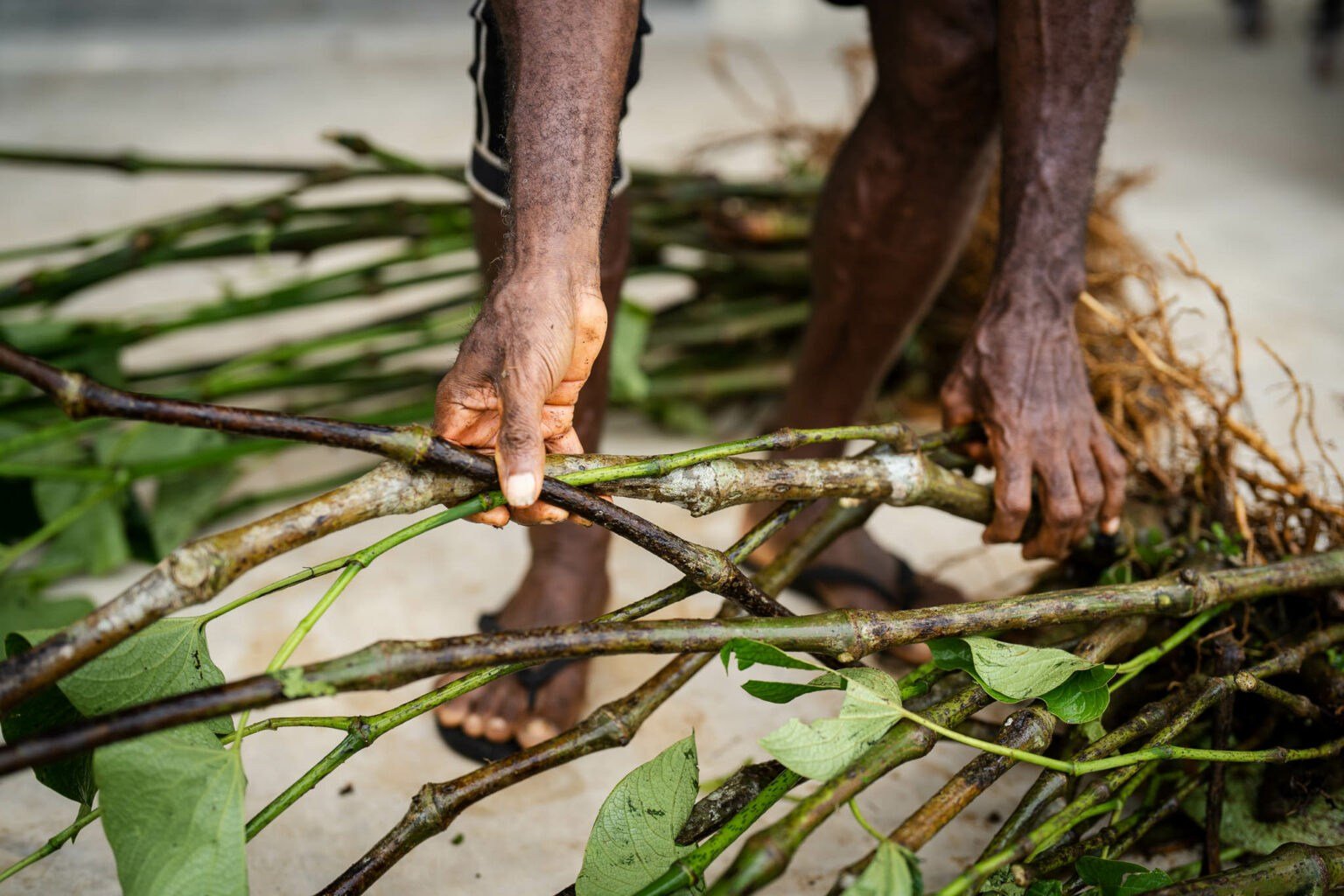
What we do: our kava is exclusively made from properly cleaned and peeled roots. No stems, no leaves, no fillers, ever. The lateral roots are physically separated from the rest before processing, and you can see the difference in the freshly harvested plants we work with.
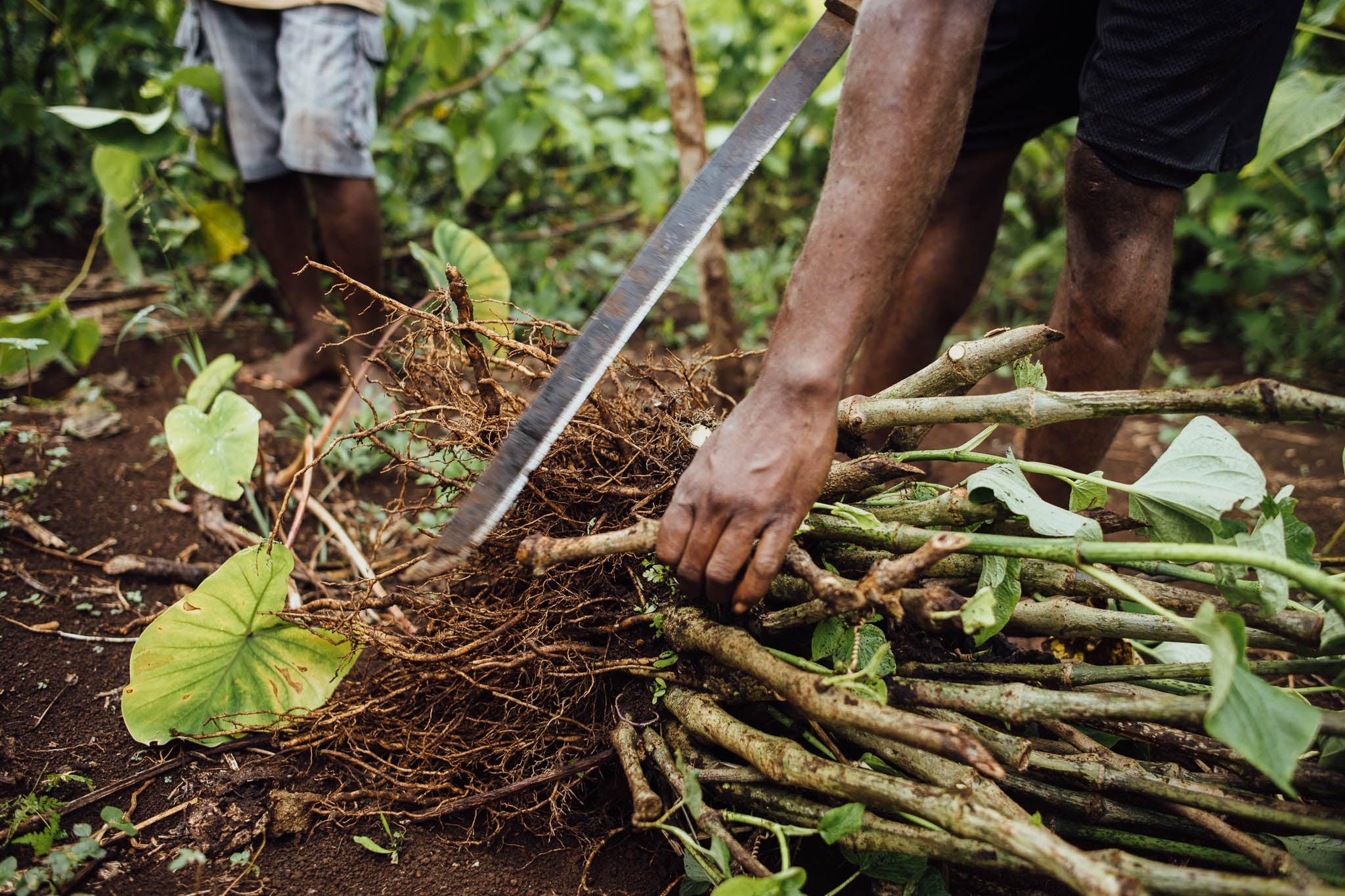
A farmer separating aerial parts of the plant from the rootstock.
3. Cleanliness and Food Hygiene
Like any food product, kava needs proper hygiene at every step. This matters more than for most foods because kava powder is prepared with cold water, so any microbial contamination present in the powder won't be killed during preparation. Yet many kava producers don't follow good practices, sometimes intentionally (drying kava insufficiently to retain weight despite the resulting mould risk) but usually because of limited knowledge or resources.
Harvest and washing. Kava should be washed with clean water and meticulously peeled immediately after harvest. The skin contains higher concentrations of bitter phytochemicals that can cause stomach upsets and nausea. Peeling is time-consuming, so many producers skip it, especially because keeping the dirt on retains extra weight. Some have limited access to clean water and end up contaminating their kava simply because the available water is polluted.
Drying. Most producers sun-dry their kava. While some build dedicated solar dryers, others place roots on the ground, on rooftops, or on sheets of corrugated iron. Kava often needs re-drying multiple times due to tropical rain, exposing it to animals, waste, and pollutants. Some Fijian farmers dry with fire, where simple dryers can produce excessive heat or smoke (and rarely, plastic and rubbish are reportedly used as fuel, introducing harmful chemicals). Solar dryers have improved things, but adoption remains uneven.
Final processing. The grinding, weighing and packaging stages should ideally be done in a dedicated, food-grade facility with regularly cleaned and sanitised equipment. In practice, kava processing facilities often resemble simple workshops or sheds. Grinders rarely get cleaned between batches, workers rarely wear protective gear, and packaging may not be food-grade. Mostly this is from lack of awareness or resources rather than intent. Appropriate measures aren't expensive but they aren't free either.
What we do: our kava is processed in a dedicated, food-grade, HACCP-certified facility from freshly harvested roots that are washed, peeled, and dried in controlled conditions. Read our full processing guide for the eighteen-step method, or read about why quality kava costs what it does.
Inside a HACCP-certified kava processing facility on Espiritu Santo.
4. Testing and Verification
The mislabelling of kava products isn't as widespread as it was a decade ago, but it's still a problem. Traditional drinkers consumed kava fresh and green, immediately after harvest, which sidesteps purity concerns entirely. Once kava became a dried, powdered product for global markets, new risks emerged: substandard practices, contamination, mislabelled cultivars, and the use of non-noble varieties.
The Acetone Test. To address some of these risks, kava enthusiasts and scientists, including Dr Vincent Lebot, developed simple cost-effective testing methods. The acetone test was one such innovation, offering a quick way to distinguish noble from non-noble kava. Mix kava with acetone and a noble sample turns yellow (because the main kavalactones are translucent or yellow when dissolved); a non-noble sample turns orange (due to higher concentrations of red-brown flavokavains). The test became a crucial tool in the early 2010s when the industry was growing rapidly with limited access to advanced lab facilities.
Detecting aerial parts. Kava with significant aerial-part content shows up via chlorophyll levels (detectable with a spectrometer). Such powders are also noticeably weaker and often suspiciously cheaper than pure root.
Microbial testing. Routine and affordable lab testing detects microbial contamination. The best prevention, though, is suppliers who maintain hygiene from harvest onwards.
Modern lab testing. Today our partners no longer rely solely on the acetone test. They run an in-house laboratory using Ultra High Performance Liquid Chromatography (UHPLC) on every batch, surpassing standard testing methods, plus comprehensive microbiological analysis. Combined with HACCP-certified processing, this is well beyond what most of the industry does. We publish a certificate of analysis for every batch we sell, accessible to anyone.
For the full picture of how we handle each of the four issues above, see Why Choose Our Kava.
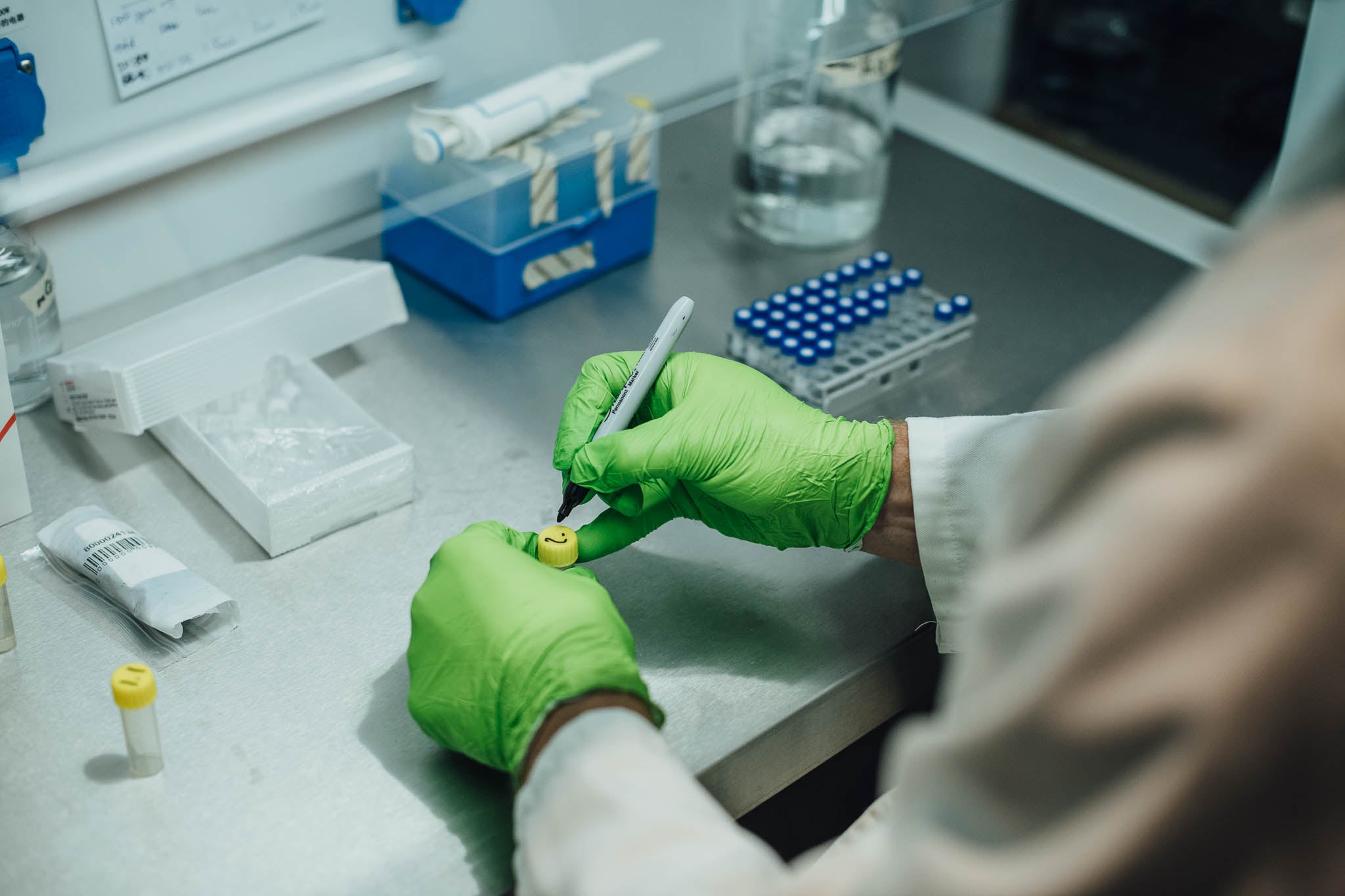
Lab analysis of kava samples in our partners' in-house facility.
Where to Go From Here
If you'd like to verify what you've read, see how we handle each of these issues, or start drinking quality kava: browse our certificates of analysis, read about our practices, or explore the shop. Questions? Get in touch.

Organically Grown Noble Kava
100% pure noble kava from pristine volcanic soils. Our farmers cultivate specific single cultivars in regions best suited for each variety. Each plant matures for at least three years using traditional organic farming methods passed down through generations.
Always Processed from Fresh
Each batch is made from kava harvested to order, never from old village-dried stock. Plants are inspected on arrival for the right cultivar, for freshness, and for contamination. Anything that doesn’t pass is rejected.

Cleaned and Dried to Fresh Perfection
Freshly harvested roots are meticulously cleaned and dried using bespoke methods developed over years of research and refinement. The process preserves potency, fresh aroma, and active compounds. Each batch is then vacuum-sealed or nitrogen-flushed to lock in freshness.
Every Batch Tested
Our kava undergoes comprehensive testing using UHPLC analysis (superior to standard HPLC), full microbiological screening, and chemotype verification in an advanced in-house laboratory. Every batch comes with complete certificates of analysis and exceeds FSANZ Standard 2.6.3 requirements.
Check out our Certificates of Analysis