Should you add fats to kava to get a stronger drink?
TLDR: Root & Pestle tested coconut oil, coconut milk, dairy milk, almond milk, soy milk, olive oil, and coconut cream added to the kava squeeze. None produced kava with statistically higher kavalactone content than plain water. Most produced less total kavalactone extraction (up to 17% less, 9% on average) and substantially worse taste. Stick with water.
If you spend any time researching kava preparation methods online, you will inevitably encounter claims about the supposed benefits of preparing kava with added fats (coconut oil, coconut milk, even regular milk or cream). It is hard to tell where the idea originates, but probably from the often-repeated claim that kavalactones (kava's active ingredients) are not soluble in water yet readily soluble in fats. It is also often observed that eating a fatty snack such as peanut butter after your kava session seems to rekindle the effects of the drink. For many people the obvious conclusion is that you should add some fat to your kava when preparing it traditionally, or even when preparing it from instant powder.
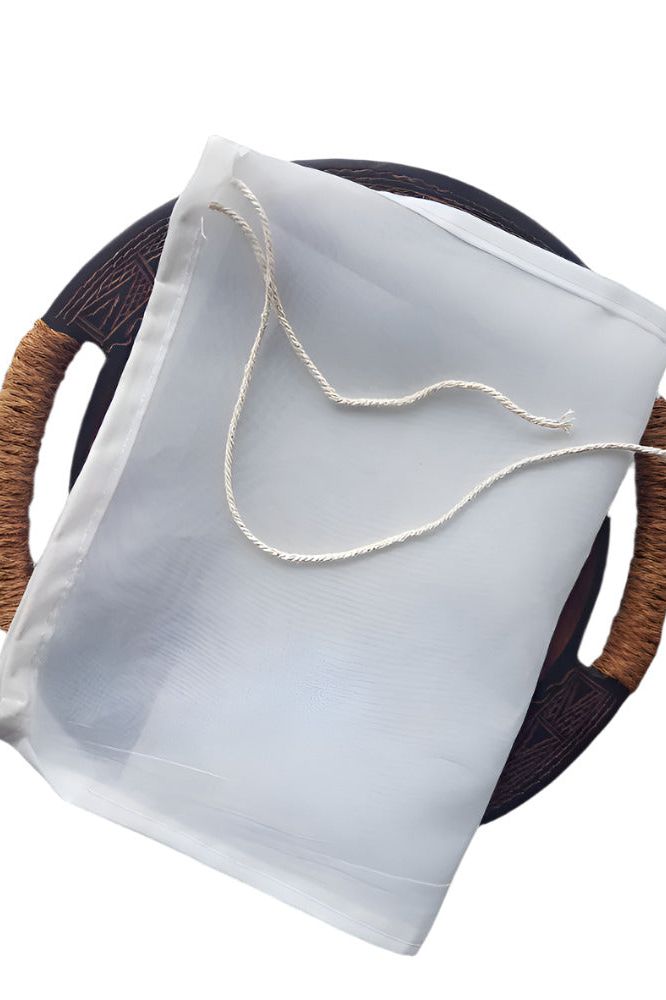
We have always been sceptical. In our experience, kava prepared with fats (even just a teaspoon of coconut oil) always seemed weaker and harder to drink. Until now we assumed this was primarily because fat coats the strainer bag and effectively clogs it. Even if more kavalactones could be released with the help of fat, they would end up sticking to the bag rather than landing in our shells.
Our friends at Root & Pestle have now put their scientific tools to work to look more closely at what adding fats actually does to kava. Their conclusions broadly support our gut feel (do not add fats), but for very different reasons and with some surprising insights. Their guest post follows.

The impact of fats on kavalactone extraction
New insights into the kava squeeze, revealed by Forney Enterprises and Root & Pestle R&D.
We are not aware of any indigenous cultures who historically added fats during kava preparation. Our controlled experiments found no benefits to adding fats during the squeeze, and some potential downsides. After thorough examination of the data, we will continue to stick with plain water.
Some background
Ni-Vanuatu peoples have been drinking kava prepared with plain water for thousands of years, a method deeply rooted in their culture and tradition. On very rare occasions we have been told of instances where coconut water may have been added, although we have never seen it firsthand at a nakamal or in any village we have visited, and it is unclear whether this was added during or after squeezing, or why. In days of yore their kava was strained through woven plant materials such as pandanus or banana leaves, coconut palm fibres, bark cloth, or sometimes through compound-containing materials such as hibiscus bark, but this is very atypical nowadays. They never add milk, cream, fats, or oils to their kava, even though all of these are available to them. There are invariably untapped improvements to any given process, but we try to learn from those who came before us, especially when in doubt, and we thank the people of Vanuatu for extending their knowledge of kava to us.
Over 200 compounds have been isolated from kava, but the six major kavalactones are believed to be responsible for the overwhelming majority of its desirable character. These kavalactones are primarily produced by epithelial cells lining the resin ducts, which are abundant in the parenchyma tissue of the lateral roots and rhizomes (also known as basal roots or stumps) of Piper methysticum. While the lateral roots are more potent, they are harder to process, especially during harvesting and peeling, and they impart undesirable flavours to the drink. As a result it is primarily the underground stumps that are used at nakamals in Vanuatu.
Kavalactones are lipophilic molecules: they dissolve readily in fats and poorly in water. Several studies have assessed the partition coefficients of kavalactones and demonstrated that they favour organic phases over aqueous ones. Organic solvents have also proven to extract kavalactones more efficiently than water. On the face of it, that makes it logical to assume adding fats to the squeeze would improve extraction efficiency when using a strainer bag. In our trials, that was not the case.
Our results
Out of 36 unique samples of kava prepared with any kind of fats, oil, or milk added during squeezing, when analysed by UHPLC, none showed statistically higher kavalactone content than kava powder squeezed with water alone. Interestingly, almost all fatty additives resulted in lower total kavalactone extraction efficiency, decreasing the total amount of kavalactones extracted by up to 17%, and by 9% on average, compared to kava prepared using water alone.
We did not investigate the mechanism behind the decrease in extraction efficiency, so it is anyone's guess at this stage whether it can be attributed to oils binding to the kava powder and preventing some particles from releasing, fats clogging the pores of the strainer bag to some extent, or something else entirely. There was an increase in the total amount of material in some of the lyophilised samples of supernatant after centrifuging, but fats were not the secret ingredient to extracting more kavalactones in our tests. The excess material was composed primarily of inactive constituents, or components of the additives themselves. The chemotypes of the beverages also did not appear to be influenced by adding oil-containing products to the squeeze.
Whether it was whole dairy milk, almond milk, soy milk, olive oil, coconut milk, coconut cream, or something else, and whether it constituted just 0.3% or up to 10% of the total liquid volume, we found none of the resulting beverages were more concentrated in kavalactones. We did not investigate emulsifiers, partly because they may be implicated in leaky gut syndrome (this is outside our area of expertise), but also because we could not find any at the limited markets available nearby when we ran these experiments, and we did not want to wait to order them in from overseas before getting started.
When we centrifuged our samples to isolate the sediment from the supernatant (the water layer), we saw that some of these additives influenced how the extracted kavalactones were partitioned within the beverage. Very oily compounds such as dairy milk, coconut milk, and olive oil all shifted the supernatant towards higher kavalactone concentrations, sometimes close to doubling the amount of kavalactone content found outside the sediment. The overwhelming majority of kavalactone content still resided in the sediment, however, and the total kavalactone content of the prepared kava remained unimproved, regardless of the type or quantity of fat.
We found that if the extraction water contained less than 1% coconut milk or olive oil by volume, the resulting kava was still enjoyable. Outside of those two exceptions, using virtually any amount of almost any kind of milk or fat during the squeeze substantially increased the bitterness. When large amounts (10% of the total liquid volume) of fat-containing additives were used, our team found the overall taste became much worse than when prepared with water alone. For many additives just 1% was enough to ruin the taste of the kava for us.
We did not investigate how adding these substances to already prepared kava might influence flavour, nor how they might influence the taste of other kavas prepared using different methods. We acknowledge that everyone's taste preferences vary. Consider doing a side-by-side comparison if in doubt. The perception of taste can change with environmental conditions and a person's physiology at any given time, but we suspect most people would easily detect an increase in bitterness when milk or other fat-containing additives are added to the squeeze.
Unsurprisingly, even small amounts of oils made for slippery gloves, and larger amounts resulted in more hassle during cleanup. When true oils made up 0.3 to 1% of the total liquid volume, there was an oily texture to the kava but it still appeared homogenous, with no obvious oil floating on top. At 3% oil content and above, the surface had noticeable oil separating from the mixture, even after thorough squeezing, and cleaning our automated squeezing machine became a real pain.
We did not investigate absorption or other pharmacological attributes. We only quantified the kavalactone content of the kava. It should be noted that snacks are often available at nakamals, and some locals enjoy small nibbles of finger food after a shell. Generally they say this is to cleanse the palate, not to potentiate the effects, but anecdotally some people do report that the kava "kicks" after they follow up their shell with something to eat. As far as getting more kavalactones from the powder into your shell goes though, based on our research, adding fats during squeezing is not likely to help.
Wrapping it up
Traditional methods, refined over generations by the Ni-Vanuatu peoples, remain the gold standard for a reason. In our view, this study reinforces the wisdom of sticking to plain water for the kava squeeze. If you enjoy adding fats (or anything else) to your kava, do not let us stop you. Taste cannot be disputed, and we all have our own preferences.
As part of our ongoing investigative series on optimising the kava squeeze, we continue to explore methods that enhance the kava experience while respecting tradition. Stay tuned for more insights as we work towards perfecting the squeeze.
Many thanks, and Malok.
Further reading from the Root & Pestle lab
- The blender method vs kneading: surprising findings
- Best water temperature for making kava
- Optimal kava kneading and preparation time
- The science behind efficient traditional preparation
For a step-by-step guide to the traditional squeeze, see how to prepare kava. If you're newer to kava, our quick guide for new drinkers walks through forms, character types, and three suggested first cultivars.










Leave a comment
This site is protected by hCaptcha and the hCaptcha Privacy Policy and Terms of Service apply.