
Best water temperature for making kava
TLDR: Across 36 UHPLC-analysed samples, water temperature had almost no effect on total kavalactone content. Hotter water pulled more sediment and more bitterness but not more active compounds. Cold water made a lighter drink, hot water shifted the chemotype slightly towards heavier compounds, and the sweet spot for taste, texture, and authenticity is 25 to 30 degrees Celsius (close to body temperature on a warm day).
We have recently published a couple of guest posts on the science of traditional kava preparation. So far we have looked at the optimal number of washes (the effect of re-using the same roots in new water) and the optimal kava kneading time. Feedback has been good, so our friends at Root & Pestle have kept digging into questions around traditional kava preparation. Today: what is the best water temperature for making kava?
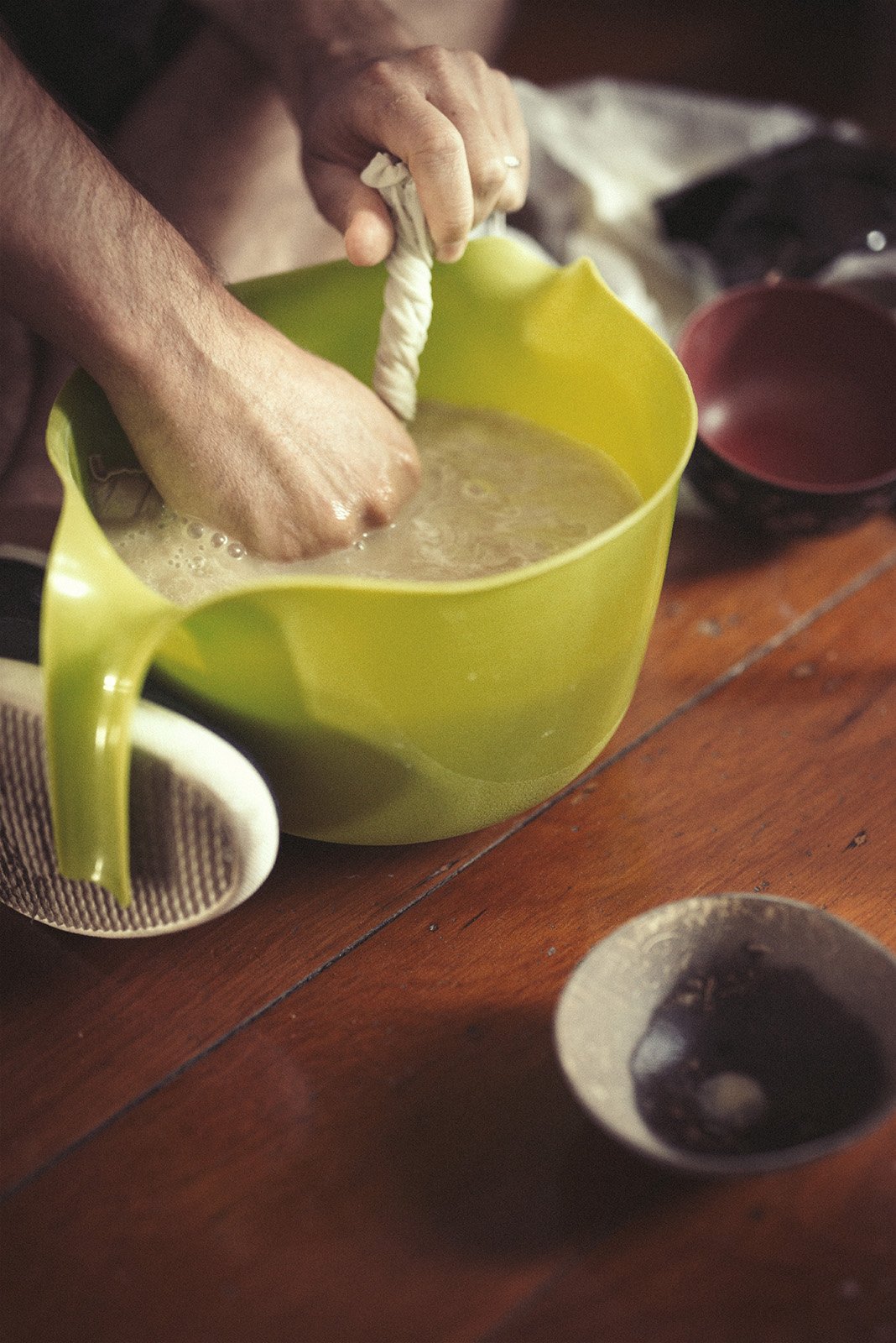
As you may know, the Australia New Zealand Food Standards Code specifies that kava should be prepared using "cold water", which is fairly vague. Most people read it as anything between ice-cold and cold enough to touch (i.e. not boiling). In our view it was intended to mean the temperature at which kava has traditionally been prepared on the islands of the South Pacific. That is warmer than New Zealand room temperature (around 18 to 20 degrees Celsius), because most islands enjoy hot tropical climates where "cold water" is closer to 25 to 30 degrees. We have therefore been recommending lukewarm or body-temperature water, and in our experience around 30 degrees produces the best results. The Forney and Root & Pestle team decided to dig deeper. They confirmed our non-scientific assessment, but with some genuinely interesting surprises along the way.
Water temperature: new insights into optimising the squeeze
From Forney Enterprises and Root & Pestle R&D.
The majority of the kavalactone content in traditionally prepared kava lies in the sediment that settles out of the drink. After scrutinising hundreds of kava preparations (and thousands of kavas) in our lab, with 36 unique samples prepared and analysed by UHPLC for this investigation into water temperature alone, we can say this with certainty. It is why stirring the natambea or tanoa is essential before dishing out each shell: it distributes the kavalactones evenly from serving to serving.
Using hotter water during the squeeze objectively yields much higher sediment content than using colder water. This is abundantly evident when many samples prepared the same way (except for water temperatures) are lyophilised (controlled removal of the water by sublimation at low temperatures and pressures). The volume of residual material in each vial noticeably rises from the one before, stepwise, in direct relation to the temperature used to prepare the sample.
When we centrifuge our samples at extreme g-forces for extended durations and subsequently separate and lyophilise the supernatant (examining the water layer rather than the sediment), we observe the same trend. Not only does hot water extract far more sediment, it also extracts significantly more soluble material and nanometre-scale particles. Lyophilised supernatant from ice-cold extractions results in nearly empty vials, while lyophilised supernatant from very hot extractions results in vials still full to the brim, holding the shape of the material that was dissolved in the water even after the water is frozen and sublimated away.
Hot water extracts more material from traditional kava powder than cold water does. There is no reasonable doubt about it.
Given those observations, and especially when taken in conjunction with the plethora of comments online stating the importance of using warm (or even hot) water during the squeeze, one could be forgiven for assuming that more sediment and more dissolved material equates to more kavalactones. Interestingly, we found that the total kavalactone content remained more or less unchanged, regardless of the amount of sediment or whether the squeeze was done with ice water or at temperatures so hot that starch gelatinisation occurred (resulting in thick, gooey kava that most would find unpalatable), or at temperatures anywhere in between. The ratio of kavalactones to sediment decreased with rising extraction temperatures.

Squeezing traditional kava powder at different water temperatures resulted in an essentially flat trendline for kavalactone extraction efficiency.
Different temperatures, different kavas
Performing the squeeze with different water temperatures still produced different kavas, for more reasons than just sediment content.
The chemotype of the prepared beverages closely reflected the chemotype of the traditional powder used to make it, regardless of water temperature, but it was not an exact parallel. We noticed that the kavain to dihydromethysticin (K:DHM) and kavain to dihydrokavain (K:DHK) ratios showed a slight but clear downward trend as water temperatures increased. The accompanying graph shows the smoothed trendlines.

Squeezing kava with ice water yielded a chemotype closer to one some associate with more heady character, while hot water squeezes shifted slightly towards the heavier side of the spectrum, though the differences were not substantial.
Kavain is often characterised as the compound most responsible for kava's heady character. Dihydromethysticin sits at the other end of the spectrum: it is metabolised more slowly and is generally regarded as a major contributor to the heavier side of the kava experience. Dihydrokavain is often thought of as sitting somewhere in between. It is worth noting that the overall experience is best understood as a synergy among the full molecular orchestra at play, rather than attributing any specific effect to a single compound.
Nevertheless, these findings suggest that not only will kava squeezed in cold water be lighter in texture with substantially less sediment, it may also subtly alter the subjective experience, nudging it towards the heady end, while hotter water may shift things slightly towards the heavier end. We did not follow this up with pharmacological assays.
The overall chemotype of the beverage most closely approximated the parent powder when prepared in water in the range of 25 to 45 degrees Celsius (77 to 113 degrees Fahrenheit), although as noted, the observed variations to chemotype were subtle at all temperatures investigated.
What temperature actually tastes good
Organoleptically, the texture changed with rising squeeze temperatures (first becoming beautifully creamy through room temperature, then thickening beyond desirability above 40 degrees Celsius / 104 degrees Fahrenheit), and the taste changed too. The distinctive pepperiness of kava became more pronounced as preparation temperature rose, particularly above 30 degrees Celsius (86 degrees Fahrenheit). At cold temperatures there was no perceptible bitterness at all, but bitterness was abundantly evident by the 35 degrees Celsius (95 degrees Fahrenheit) mark, and by 42.5 degrees Celsius (108.5 degrees Fahrenheit) we found the taste to be rather unpleasant. Our team described kava prepared at higher temperatures as "nasty", but only you can decide your own preferences.
We are accustomed to drinking kava at local nakamals here in Vanuatu, where spring water, rainwater, or sometimes river water is used. These feel somewhat cool to the touch at first, but by the time they are collected and brought to where the squeeze takes place, they have usually warmed to about ambient temperature, which is typically around 28 degrees Celsius (82.4 degrees Fahrenheit) towards the second half of the afternoon, when most kava sessions in this part of northern Vanuatu begin.
For us, the kava experience is most authentic when we can closely emulate that. The sweet spot is water in the range of 25 to 30 degrees Celsius (77 to 86 degrees Fahrenheit). If you want a lighter kava that some may find easier to drink, you can use cooler water without worrying that you are losing significant kavalactones, although it should be said that there may be other compounds in the sediment that contribute to the overall experience, and we did not investigate the pharmacology of the finished products in this experiment. We only quantified kavalactone content.
A note on chilling kava
We did not standardise the temperature of our prepared kavas before consumption, but in our experience most people find kava easier to drink when it has been chilled. At some nakamals in Vanuatu, or on special occasions, bottles filled with frozen water are placed into the serving bowl after the squeeze to chill the kava without diluting it. Many people enjoy being served kava this way, although it is less common in Vanuatu than simply drinking the kava warm.
On a related note, despite kava's documented antimicrobial properties, and despite the fact that pathogens do not tend to grow in kava powder when it has been properly processed, appropriately pasteurised, and reduced to a sufficiently low moisture content, once prepared, certain bacterial species can colonise the mixture and turn it sour. This happens much more slowly when the kava is cold, so if you are making a large batch to serve over several hours or longer, keeping it chilled is worth considering.
By sharing our understanding of the nuances of kava we hope to help drinkers tailor the experience to their own preferences while keeping it authentic. We hope this investigation adds something useful to your own preparation, and we thank you for joining us in exploring this remarkable plant.
Further reading from the Root & Pestle lab
- The blender method vs kneading: surprising findings
- Optimal kava kneading and preparation time
- The science behind efficient traditional preparation
- Should you add fats to kava to get a stronger drink?
For a full guide to the squeeze, see how to prepare kava. If you're not sure where to start, our quick guide to kava covers the practical questions: instant or traditional grind, heady or balanced or heavy, and which cultivars suit different occasions.






Leave a comment
This site is protected by hCaptcha and the hCaptcha Privacy Policy and Terms of Service apply.