
Preface
We are delighted to be able to share this guest blog post (written by our friends from Root and Pestle) profiling a very unique kava cultivar, Puariki, from the remote, fertile and beautiful island of Tongoa (Vanuatu).

Some of you, our readers and friends, may remember that Puariki has always been a sort of personal mission for us. We first tried it around 2012 in Vanuatu and then in New Zealand, and were amazed by its effect profile and distinct aroma. So much so that for years we kept trying to figure out a way to source more of it. Unfortunately, the devastating cyclone Pam in 2015 wiped out most of the plants on the island, and the extremely remote nature of Tongoa has always made it a challenge to arrange any transport. But we kept talking to our friends and collaborators from Root and Pestle about it for years.
A couple of years ago they managed to get 1 to 2 plants as part of their efforts to study and catalogue different cultivars from across the archipelago. We ended up with a small amount of insanely good kava powder that we happily consumed during a session at the Auckland University of Technology and even got some for the Four Shells Kava Lounge in Auckland. The feedback was great and since then we've kept asking our Vanuatu partners to figure out a way of sourcing a bit more of it for us to be able to share it more widely. This task seemed doomed with lockdowns, inter-island travel restrictions etc further complicating things. As our friends are masters at making the impossible possible, they have finally managed to arrange a dedicated expedition (involving a small charter airplane) directly to Tongoa from their base on Santo.
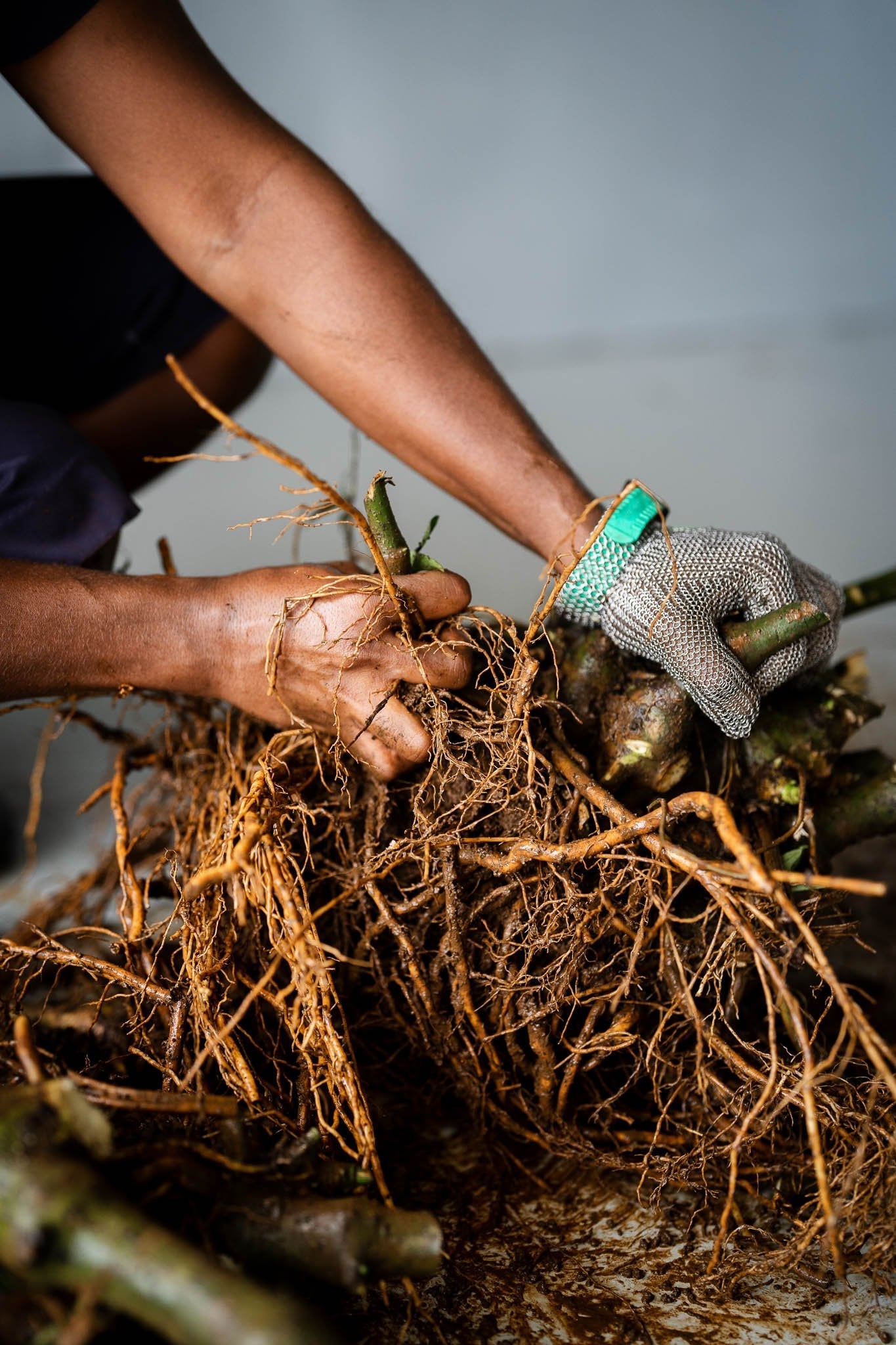
The expedition was led by John (chief scientist) and Joseph (research assistant and kava phenotype identifier/expert). In addition to connecting with the local growers, they also sought to secure a larger batch of freshly harvested plants to take back to Santo. As there are currently no ships transporting goods directly from Tongoa to Santo, the only way to ensure the plants would remain beautifully fresh for processing was to literally fill the whole airplane up to the ceiling with fresh plants. For that purpose the boys called an even bigger air taxi to assist.
Read their post below for a detailed (and fascinating) description of the Puariki cultivar, plus the account of their trip there and back to Santo. We are sure you will enjoy it, especially if you are lucky enough to be drinking some of this excellent kava while reading it and looking at the beautiful photos they took.


Cultivars of Tongoa
There are two distinct cultivars of kava endemic to Tongoa: a vigorously growing plant with long branches between nodes and a root ball that rapidly becomes a mammoth which can weigh upwards of 60 kg at harvest, and a much slower growing plant with more closely spaced nodes and a large but much more modest root ball, which at maturity (after 5 to 7 years of careful cultivation) is typically in the 10 to 25 kg range. These two cultivars are known ubiquitously amongst Tongoans as Buariki and Bualieu, derived from their word for kava (bua) and their words for small (riki) and big (lieu) respectively. With the difference between the Tongoan pronunciation of "P" and "B" sometimes being a little difficult to discern by the non-Tongoan ear, and the notoriously wide range of spellings for any given word in Bislama (the common tongue of Vanuatu), Buariki and Bualieu were first recorded off the island as Puariki and Pualiu, and subsequently made their way into the Vanuatu Kava Act (2002) as such. Hence "Buariki" isn't listed as one of the varieties of noble Vanuatu kava officially permitted for export, and as such is always labelled within Vanuatu for export as Puariki, even though on the rare occasion a sample has made its way overseas it has sometimes been promoted as something with a similar sound or spelling, such as Boariki or Pauriki. As with many things, it is easy for a few of the details to get lost in translation. But whether you want to call it Pauriki, Puariki, Boariki or Buariki, one thing is for sure: this is some seriously nice kava.
An icon of pride
In the language of the locals, true Tongoan kava is either the big one or the small one, and everything else was introduced from other nearby islands in contemporary times, and is cultivated only in relatively small quantities, a bit like a novelty crop. The farmers are proud of their stands of Borogoru, their "Kava from Tanna" (almost certainly Kelai, which was probably brought to Tanna from Epi), and their very limited specimens of "Chief's Kava" (as yet a mystery, but we'll get back to Tongoa to thoroughly check it out at some point). But when asked about their favourite cultivar, the answer is consistently given with pride and is almost uniformly the same: Buariki.
Why? Well, from our own perspective, this is the first time we've had enough kava to the point where we literally could not walk properly and yet the next morning awoke and felt as if we hadn't consumed any kava the night before. Great effect. Great sleep. Zero hangover. Easy transition back to daytime the next morning, and to be clear, we were physically obliterated. In short, it was amazing. Are we biased? Yes, probably, and so is every Tongoan, but nevertheless, this stuff is good. Clean drinking. Very easy to swallow, shell after shell (if you're so inclined), easy on the stomach and on the mind. (Though as we were reminded by the friends of the person who squeezed it, that does depend too upon the preparation.) Regardless, this was obviously something special.
What do people say it's like?
A few years ago, as part of our research and development efforts, we organised an expedition to Tongoa (among other islands) and we sourced a tiny amount of Puariki for analysis and sampling. The Kava Society in New Zealand then organised a couple of small, quiet sampling sessions, including at the Four Shells Kava Lounge in Auckland. The feedback was outstanding. The lucky few who got to try it clearly agreed that it was a phenomenal cultivar. They loved the fresh, slightly zesty, sweet and spicy aroma and the smooth drinking experience. But, above all, they were amazed by the effects profile. They told us that it delivered a clearly blissful, highly pleasurable start, followed by fascinating but not overpowering depth, with at least one Aucklander calling it "like Kelai, but with an extra engine".
Survival of the fittest

We were hunting a rare and precious cultivar found exclusively on the remote Vanuatu island of Tongoa, deep in the rainforest. And this was no ordinary crop of Puariki. Having survived volcanic ash deposits, damaging winds and debris from storms and tropical cyclones (including Niran and Yasa, both category 5, as well as Harold, category 5 with 278 km/h winds and a mind-bogglingly vast diameter of 3,741 km), this was a plantation of mature 7-year-old plants which by no means should have persisted, and yet they did. We are pleased to share them with kava drinkers around the world.

Kava is not an especially hardy plant, and the cyclones of the past few years have been particularly savage in Vanuatu. And yet this special field of Puariki, with its dense perimeter of jungle and mountainous terrain, was somehow spared. In fact, cyclone Pam, the second most intense tropical cyclone in the South Pacific in all of recorded history (and which devastated Vanuatu in March 2015), may have been partially responsible for providing the birthplace of this little patch of Puariki. It ripped to shreds the vegetation that formerly had taken hold of the terrain here, giving necessary reason to the immediate planting of this crop, at this exact time and place, just as the storm passed and local villagers began piecing their lives back together.
With plenty of care from the Ni-Vanuatu caretakers, these stems of a previously shredded crop were planted and tended to until they reached their absolute peak. We've had hundreds of cultivars through our facility and these plants stand out. The rumours and stories told us as much. Drinking it confirmed it. Fresh from the soil in Tongoa, this is exceptional kava.
An adventurous harvest for the freshest kava

We took a small, 5-seat airplane to Tongoa from our processing facility in Santo, but we needed to arrange Air Taxi Vanuatu's 9-seater for the return trip. We knew we needed to bring as much of this kava home as we could possibly carry, and that was the biggest aircraft we could safely land on Tongoa. (Not to mention that there aren't many carriers here, and those are Air Taxi Vanuatu's two options.)

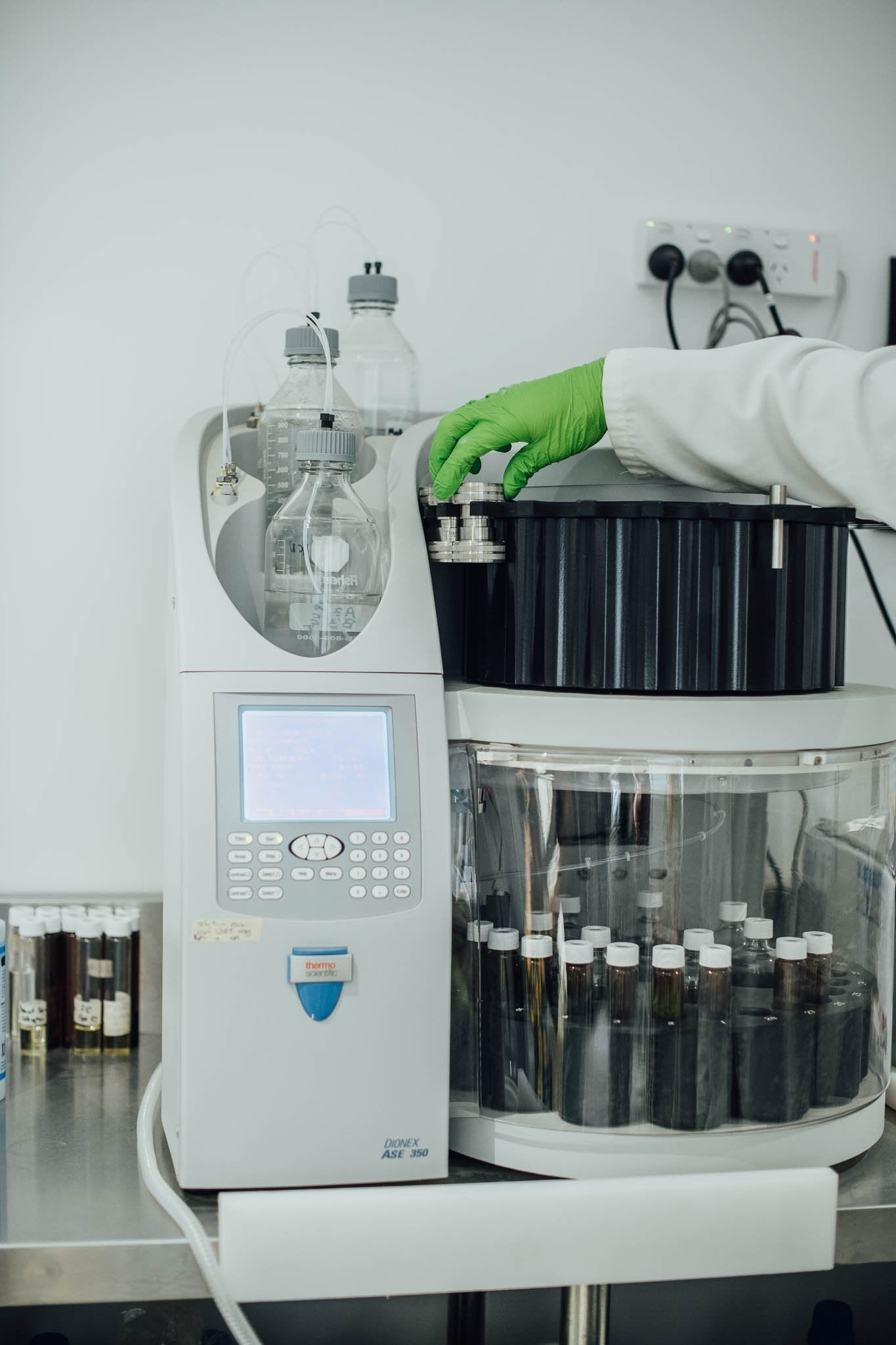
Our processing facility is only a couple of hundred kilometres to the northwest of Tongoa, which is only about an hour or so away by plane. So the good news is that we were able to get the kava back to our facility so soon after harvest that people just a village or two away from where it was harvested wouldn't even be able to get it as fresh. Our processing techniques mean we can lock in the freshness, the flavour, the kavalactones, and the experience of drinking this kava as if you were here with us during the harvest, but with the ability to keep it shelf stable for years, so that we can get it to you anywhere in the world.
Chemotypical specifics
To assuage those with a bit of a technically inquisitive mind, the chemotype of the finished product is 423156. This kava root powder is a perfect blend of lateral roots and rhizome (basal chips) in the ratio provided by nature as found in the plant at maturity, with the basal chips weighing about twice as much as the lateral roots at the time of harvest.
The relative kavalactone content of this special R&P Puariki:
| Kavalactone | Relative content |
|---|---|
| Kavain | 32.62% |
| Dihydrokavain | 30.76% |
| Yangonin | 12.22% |
| Desmethoxyyangonin | 11.03% |
| Dihydromethysticin | 6.99% |
| Methysticin | 6.38% |
Any given sample of the finished product gave a K/DHM ratio which was typically in the range of 4.537 to 4.667, and extracted kavalactones were estimated to typically represent about 7.31% of the kava mass, with a lower limit of 65,718 mg/kg and an upper limit of 74,676 mg/kg. (For more on chemotype notation and what each kavalactone tends to contribute, see our post on kava chemotypes.)

From our nakamal to yours

There may be a finer cultivar still to be discovered, but for now we hope you'll enjoy what we believe to be among the best kava root powders available anywhere in the world: Root & Pestle Puariki. The adventure of collecting this kava, and of spending time with the growers, harvesters, and villagers of Tongoa was far too comprehensive to explain in detail here. We hope to tell you more about the lives behind this wonderful harvest in an upcoming blog post.
In the meantime, from our nakamal to yours, please enjoy a shell of R&P / Kava Society Puariki. Puariki is grown in tiny quantities on Tongoa and stock comes and goes. If it is currently out, Kelai and Palarasul are the closest matches in our range for the same fast, heady, clean-drinking character.





%20profiling%20a%20very%20unique%20kava%20cultivar,%20Puariki,%20from%20the%20remote,%20fertile%20and%20beaut...)
Leave a comment
This site is protected by hCaptcha and the hCaptcha Privacy Policy and Terms of Service apply.