
Most of our kava comes from one island: Espiritu Santo, the largest island in Vanuatu. We've mentioned Santo many times on this blog and across our product pages, but we've never properly written about the island itself, its history, or the people who grow kava there.
A few months ago we got talking to our partners at Root and Pestle in Vanuatu about putting something together showcasing Santo as a kava-growing region. Most of our kava is grown there, all of it is processed there, and most of the Root and Pestle team live there. It's a place we know fairly well and care about. Root and Pestle surveyed the Santo-based farmers who grow the kava that ends up in our products, asking them about their lives, their families, their farming, and what kava means to them. Combined with some wonderful photos taken on Santo farms, this gave us the material we needed to finally put this post together.
We hope it gives you a fuller picture of where your kava comes from, the communities behind it, and why this particular island matters so much to what we do. If this format works well, we'd love to do similar profiles for the other islands our kava comes from (we're looking at you, Tongoa and Malekula).
The island
Santo, as everyone calls it, is the largest island in Vanuatu at roughly 4,000 square kilometres. For readers in New Zealand, that's more than twice the size of Stewart Island. If you're more familiar with European islands, it's about the size of Mallorca. Americans might think of Long Island, which is a bit smaller.
A mountainous spine runs along its western coast, topped by Mount Tabwemasana at 1,879 metres, Vanuatu's highest peak. The south and east of the island flatten out into fertile, well-watered valleys and coastal plains, which is where most of the farming (and most of the kava growing) happens.
Santo is home to around 40,000 people. Luganville, on the southeast coast, is the only real urban centre (with a small international airport that offers direct flights to Brisbane, Australia and Vanuatu's capital city of Port Vila), with a population of around 18,000 and the distinction of being Vanuatu's second-largest town. The rest of the island's population lives in small rural communities, combining subsistence farming with cash crops.

A layered history
Santo has been home to Melanesian peoples for around 3,000 years. Archaeological evidence from across the Vanuatu archipelago dates the earliest settlement to roughly 1300 BC, when carriers of the Lapita culture arrived from the west. Over the centuries that followed, Santo's communities developed in relative isolation from one another, which is part of why the island today has over 30 distinct languages. Kava cultivation is deeply embedded in this history. Vanuatu is widely considered the place where kava was first domesticated, and Santo's farmers are custodians of a tradition that predates European contact by millennia. Custom, or kastom, remains central to how communities organise themselves today. The chief system is strong in most areas.

The first European to arrive was the Portuguese navigator Pedro Fernándes de Queirós, who in May 1606 sailed into a broad bay on the north coast. Convinced he had found the great southern continent, he knelt on the beach, kissed the earth, and claimed everything south to the pole for the King of Spain. He named the land "Austrialia del Espíritu Santo," a pun honouring the Spanish Habsburg (Austrian) rulers. He tried to establish a colony called Nova Jerusalem. It collapsed within weeks. Queirós was wrong about the continent, but the name stuck. The island is still called Espiritu Santo, and some historians trace the word "Australia" back to his coinage. So the place where most of your kava grows may well be the original Australia.
After Queirós, Santo was left largely alone by Europeans until the British and French arrived in force. In 1906 they agreed to jointly administer the whole archipelago as the "New Hebrides." This Anglo-French Condominium (sometimes called the "Pandemonium" by locals, for obvious reasons) meant the islands had two of everything: two police forces, two legal systems, two sets of schools, two currencies. It was as strange as it sounds and it lasted until 1980.
The Second World War transformed Santo entirely. In 1942, the Americans arrived and built what became known as "Base Button," the second-largest Allied base in the Pacific after Pearl Harbor. Over 500,000 service personnel passed through. The US Navy's construction battalions carved four airfields from jungle and coconut plantations, some in as little as 20 days. They built hospitals, ammunition dumps, a fuel farm, a 90,000-tonne floating drydock, and enough infrastructure to support a war across half the Pacific. Luganville's main street is still unusually wide because a base commander insisted four tanks should be able to drive along it side by side.
Around 10,000 ni-Vanuatu men served in the Vanuatu Labour Corps during the war, providing logistical support for the Allied effort. The experience had a lasting impact on local political and cultural movements, including the John Frum movement on Tanna, which is still active today as both a religion and a political party.
The writer James Michener was stationed on Santo during the war. His Pulitzer Prize-winning novel Tales of the South Pacific drew heavily on his experiences there, and later became the Rodgers and Hammerstein musical South Pacific. When the war ended, the Americans pulled out fast. Rather than ship their surplus equipment home or sell it to the local colonial authorities (legend has it the French and British tried to haggle on price and the Americans lost patience), they drove hundreds of tonnes of trucks, bulldozers, and jeeps off a point of land into the sea. That site is now known as Million Dollar Point and remains one of the Pacific's most popular dive sites.
Then came independence. In 1980, as Vanuatu prepared to become an independent republic, a charismatic local leader named Jimmy Stevens declared Santo the independent state of "Vemerana." He was backed by French plantation owners and, weirdly, by the Phoenix Foundation, an American libertarian organisation that had spent years trying to establish a tax-free nation somewhere in the Pacific. Stevens' followers were armed mostly with bows, arrows, and slings. The resulting standoff, known as the Coconut War, was put down by Papua New Guinean troops called in by Vanuatu's first Prime Minister, Walter Lini. The residents of Santo generally welcomed the Papua New Guineans as fellow Melanesians, and the conflict ended quickly. Stevens went to prison, and on 30 July 1980, the Republic of Vanuatu was born.
Today, Santo is a quieter place. Copra, cocoa, cattle, kava, and tourism (including some of the world's most stunning beaches and diving on the Coolidge wreck and Million Dollar Point) make up the local economy.


Why Santo matters for your kava
Santo is important to us for two practical reasons.
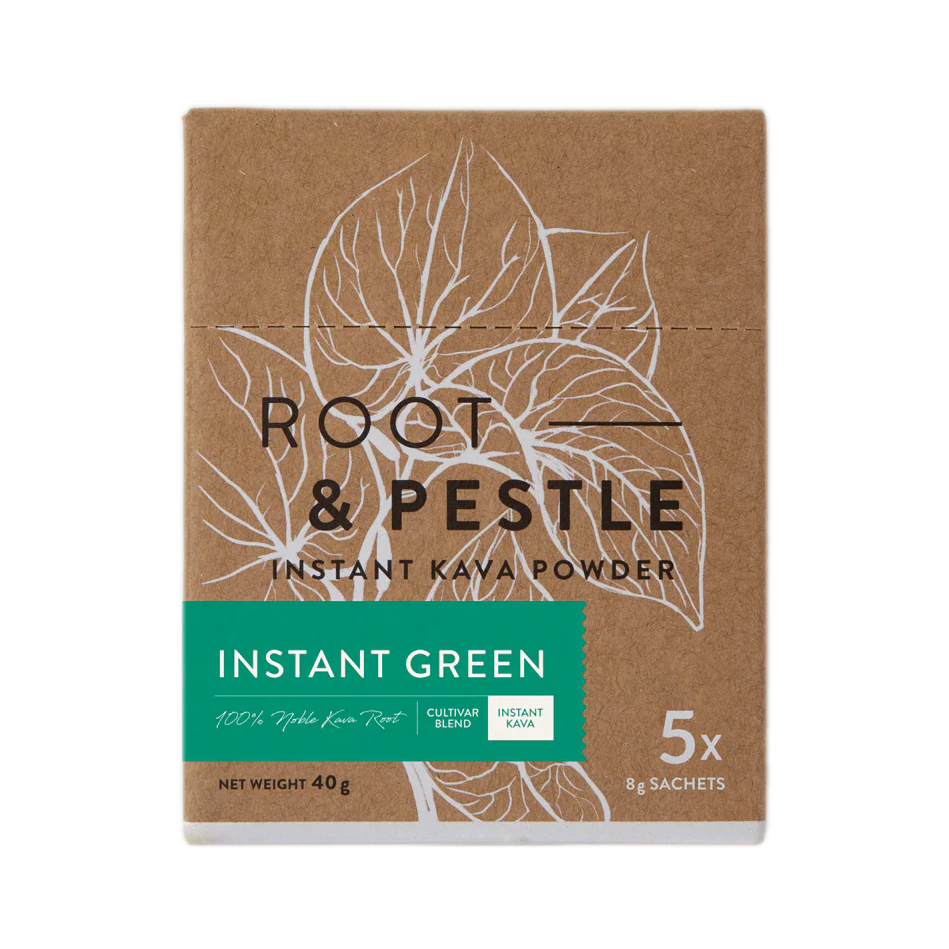
First, our partner processing facility, run by Root and Pestle, is based on Santo. This is the facility where all of our kava is washed, peeled, dried under controlled temperatures, milled, tested, and vacuum-sealed (you can read a detailed walkthrough of the process in our blog post on how our kava is made). Because the facility is on Santo, kava harvested on the island goes from the ground to the factory in hours. Freshly harvested kava begins to oxidise and degrade the moment it leaves the soil, and the speed of processing is one of the biggest factors in final product quality. Having the facility close to the farms is a real advantage.
Second, Santo is the native home of some of our favourite cultivars. The Vanuatu Kava Act of 2002 classifies Palarasul and Bir Kar (along with several related cultivars including Palasa and Bir Sul) as noble cultivars originating from Santo. Palarasul was the first single cultivar we ever sourced from Vanuatu and it remains a personal favourite: smooth, uplifting, floral, peaceful. Nearly all of it is consumed locally by ni-Vanuatu who have appreciated it for generations. Bir Kar, named for its distinctive red stems ("kar" means red in the local language), is a rarer cultivar grown in Santo's interior with a character quite unlike anything else in our range. If you've read our deep dive into kava chemotypes, you'll know that both Palarasul and Bir Kar share a 423156 chemotype code, yet they produce distinctly different experiences, which is a good illustration of why chemotype numbers alone never tell the whole story.
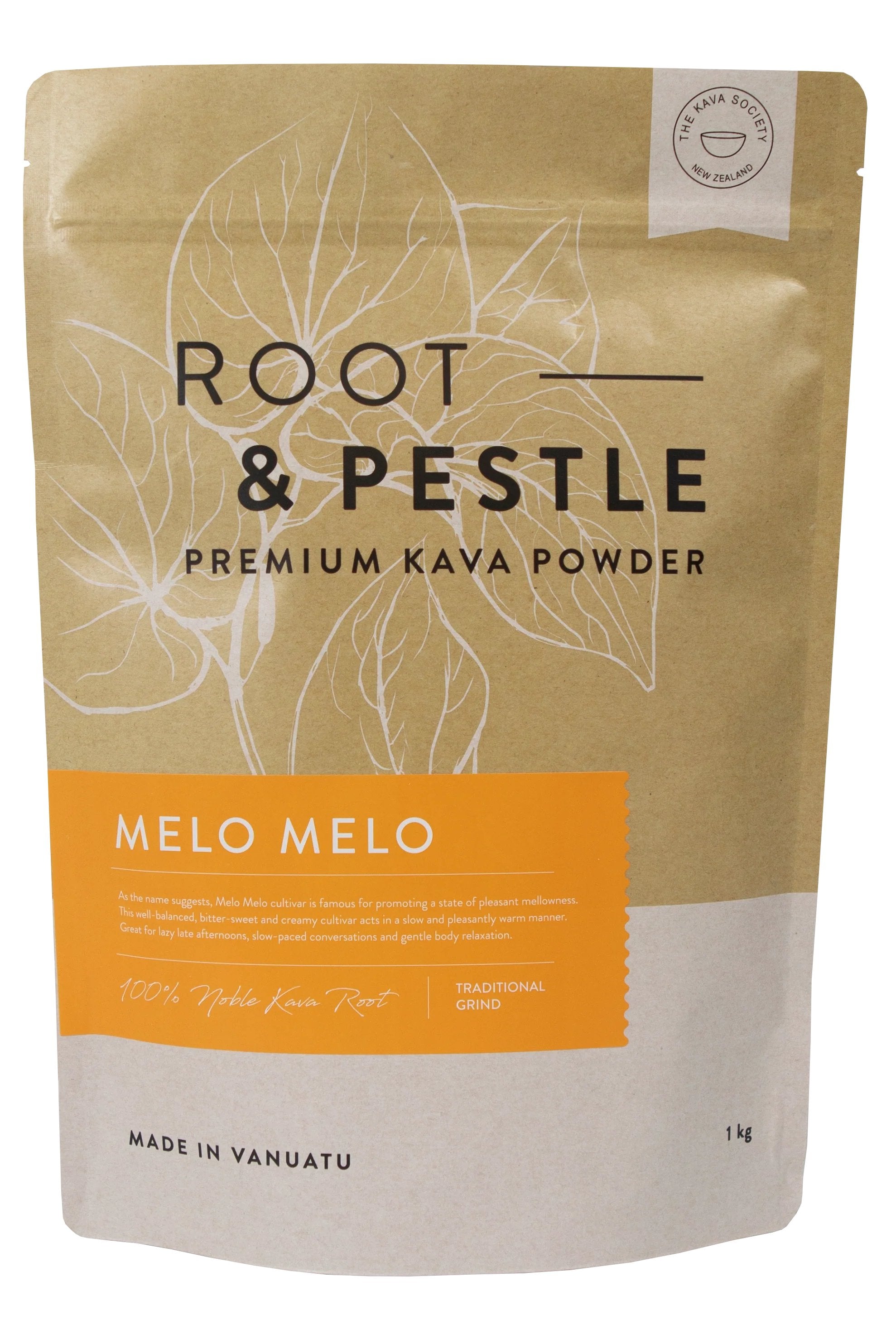
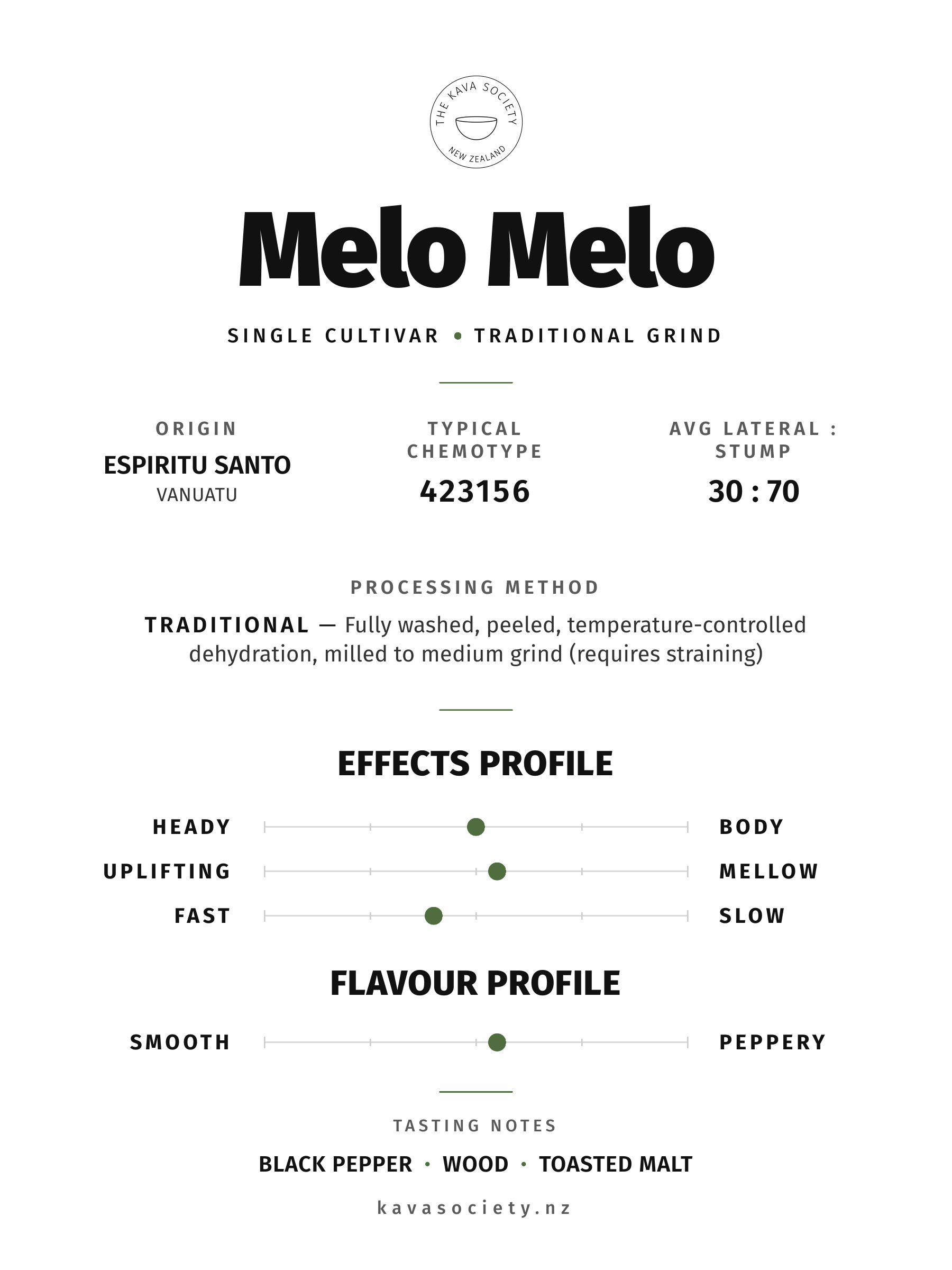
Other cultivars that aren't native to Santo also grow well there. Melo Melo originates from Ambae, and Borogoru from Maewo, but both have been introduced to Santo and thrive in its volcanic soil and tropical climate. The island's combination of fertile ground, reliable rainfall, and varied elevation makes it an excellent growing environment for kava. As Dr Vincent Lebot has noted, Vanuatu's growers have always aimed to cultivate several high-quality cultivars, and Santo's farmers are no exception, with most growing three or more varieties alongside their food crops.

The farmers of Santo
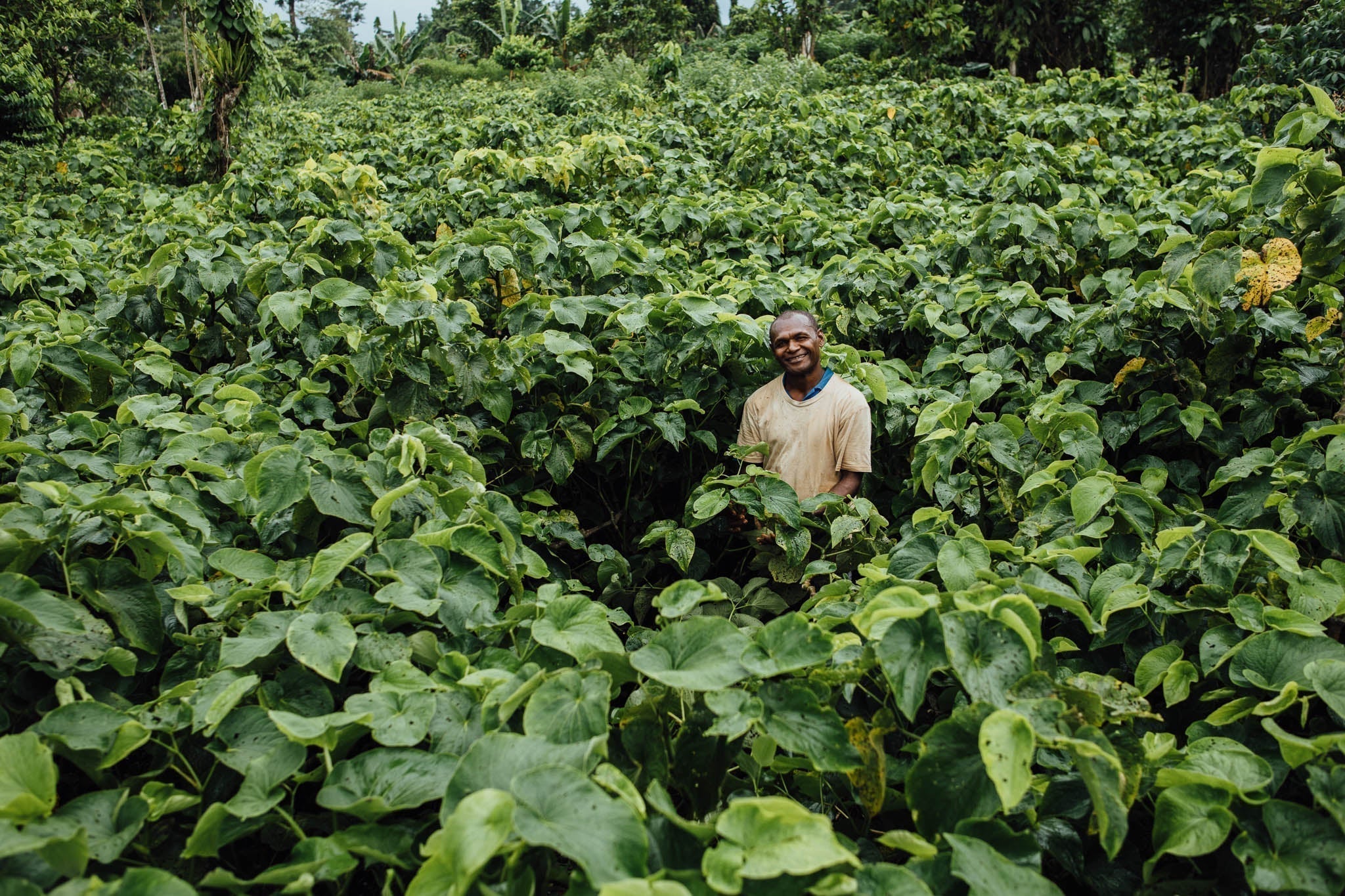
Root and Pestle recently surveyed the Santo farmers who grow the kava that ends up in our products. They asked about families, farming practices, how long they've been growing kava, and what the income means to them. We wanted to share some of what they told us. (Note: the farmers' responses were handwritten and we've lightly edited some quotes for clarity.)
The farmers come from communities scattered across Santo's south and interior: Belerou, Mavun, Wailapa, Hydro, Filiti. Most grow Palarasul (known locally by various names including Palavasul, Birsul, and others) alongside Bir Kar and Melo Melo. Alongside the kava, they grow food crops: taro, yam, banana, island cabbage, manioc, peanuts, corn. Kava is the cash crop that pays for everything else.
The kava plants are typically harvested at three to four years old. Farmers grow them in a range of conditions: some on flat land in full sun, others on gentle slopes with partial shade. Soil types vary from rich black volcanic earth to drier red soils. Most farmers keep their kava gardens clean and well-weeded, and many plant food crops like island cabbage and taro around younger kava plants. One farmer, Lulu Neto from Mavun, described planting island cabbage around his kava when it was about a year old to encourage its growth.


John Meto, Mavunleva. John has been growing kava for 50 years, making him one of the most experienced growers we work with. He has six children and supports ten people. He spends his kava income on food, school fees, and building houses. His message: "When drinking kava, you need to enjoy it and remember where it comes from."
Adam Vuso, Navin. Adam grows Bir Kar and Melo Melo on flat land in the Mavun area. He has three daughters and has been growing kava for 20 years. His father was a British policeman during the New Hebrides condominium era, and kava has been part of his family for generations. With the income from kava, Adam has been saving for a new car, building a house, paying school fees, and building a shop. "We are so lucky that [Root and Pestle] established here in our country, that can process our plants and export them," he said.
Peter Vatu, Navango. Peter is originally from Tongoa (the island where our Puariki cultivar comes from) and his wife is from Malekula. They settled on Santo, started a family, and began planting kava 23 years ago. Peter now supports around 100 people through his farming, paying workers and providing for the wider community. "I thank you for paying for our cultivars to make our living," he told the survey.
Elder Bae, Navango. Elder has grown kava for 30 years in the Belerou area. He takes pride in the fact that his kava is organic and that his community works together. His family's kava tradition was started by the women of the family, which is a nice reminder that kava farming in Vanuatu involves entire families and communities. "Kava is good for making money out of it and also helps to our family needs," he said.
Christian Teter, Hydro. One of the younger growers at six years' experience, Christian represents the next generation. He grows Melo Melo, Borogo, and Palarasul on flat land in the Hydro area (named for the hydroelectric station that powers the surrounding region). He has a 12-year-old daughter. "Generation to generation we've been planting kava for years," he wrote. "We will continue to supply our best in our garden to you."


What the farmers told us
Reading through all the profiles Root and Pestle compiled, a few things came up again and again.
School fees. Nearly every farmer listed paying for their children's education as a primary use of kava income. In Vanuatu, where education carries significant costs, this is often the largest household expense. Building permanent houses was the next most common goal. After that: food, transport, paying farm workers, and contributing to the wider community.
The phrase "generation to generation" appeared in almost every response. Kava cultivation on Santo is knowledge passed down within families, from parents and grandparents to children, over decades. John Meto has been at it for half a century. Daniel Mestin for 29 years. Elder Bae for 30. The farming practices, the cultivar preferences, the understanding of which soils and conditions work best for which varieties, all of this is accumulated generational knowledge.
Several farmers mentioned supporting entire communities. Peter Vatu's figure of 100 people is the highest, but many others wrote "lots" or "full community" when asked how many people depend on their farming. Kava growing on Santo is a communal endeavour. Families work together, share knowledge, and reinvest in their villages.
And there was gratitude. We weren't expecting that so consistently, but almost every farmer included a message of thanks to the people who drink their kava. They see the connection between their work and the people overseas who appreciate the product. It's a relationship they value, even across thousands of kilometres of ocean.

From Santo to your shell
When you open a bag of our kava, you are holding the product of a very specific chain of people and places. A farmer in Belerou or Mavun or Hydro grew the plant over three to four years, tending it in volcanic soil, keeping the garden clear. It was harvested and transported to Root and Pestle's facility on Santo, where it was washed, peeled, dried, milled, and tested within hours of leaving the ground. It was nitrogen-flushed and vacuum-sealed to lock in that freshness, then shipped to New Zealand and on to wherever you are.
The farmers we work with are proud of what they grow and they asked us to pass on their thanks to the people who drink their kava.
As John Meto put it: remember where it comes from.
If reading about Santo has piqued your curiosity, Palarasul and Bir Kar are both native Santo cultivars and the easiest way to taste the island in your shell. If you're new to kava, our quick guide for new drinkers is a good place to start.










Leave a comment
This site is protected by hCaptcha and the hCaptcha Privacy Policy and Terms of Service apply.